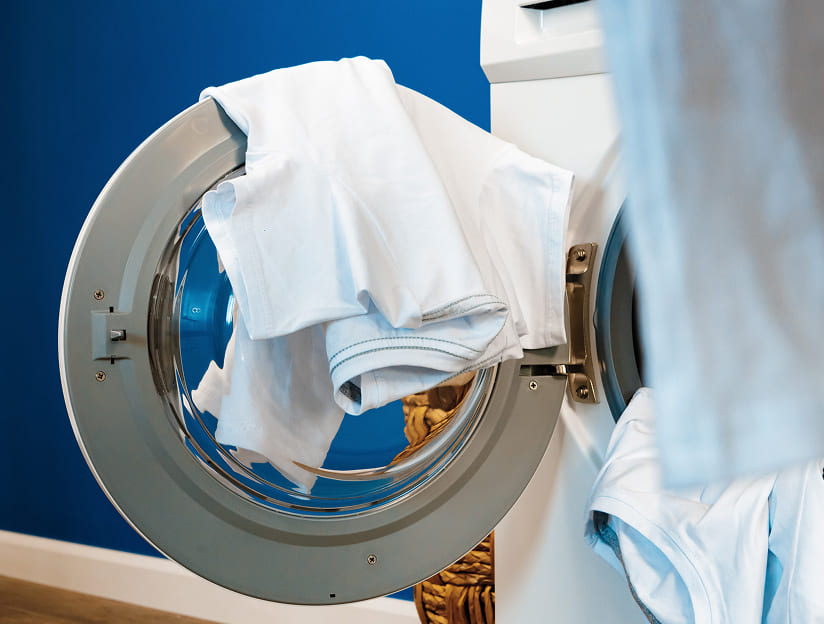
Why Whites Turn Dull Over Time
Whites rarely go gray overnight — it happens gradually, usually from detergent residue building up in the fibers, hard water minerals, or the occasional rogue dark sock sneaking into the load. Once that dinginess sets in, it takes real effort to reverse.
The good news is that most of it is preventable with a few small changes to how you wash, rather than any special product.
Sort and Pre-Treat Before You Wash
Keep whites separate from even light pastels — colors bleed more than people expect, especially in the first few washes of a new garment. Within your whites load, group similar fabric weights together so everything gets the same treatment.
Pre-treat visible stains — collar grime, food spots, deodorant marks — before the item goes into the machine. Once a stain has been through a hot dryer cycle, it's far harder to remove.
Choosing the Right Cycle and Water Temperature
Hot water is more effective at lifting soil and brightening whites, but it's also harsher on elastic and delicate trims. As a rule of thumb, use warm-to-hot water for sturdy cottons like towels and bedsheets, and a cooler setting for anything with stretch or decorative detailing.
Avoid overloading the machine — whites need room to move freely in the water for the detergent to rinse out completely, which is one of the biggest factors in keeping them bright wash after wash.
Drying and Storing Whites Properly
Sun-drying is still one of the best natural whitening methods available, though it isn't always practical. If you're using a dryer, avoid overly high heat, which can set in any residue that didn't fully rinse out.
If you'd rather not risk your whites at home, our team handles this exact balance of temperature, detergent, and fabric care every day — feel free to bring them in and let us take care of the details.

Have a Garment That Needs Expert Care?
Thank you for trusting Thana Power Laundry—proudly serving Thane families for over 60 years.